
About this guide

A member of staff or a carer can support you to read this guide. They will be able to answer any questions that you have.
About this guide
- This guide is for people who sometimes hear voices or who have thoughts that upset them.
- This guide was made with information from people who have heard voices or had bad thoughts.
- This guide might help you and your carers learn about what it means to hear voices or have bad thoughts.
 Print or download as a PDF
Hearing voices

Hearing voices can be a frightening thing to happen. You might not understand what is going on.
People who have heard voices before have said that you might feel:
- Tired, or can’t be bothered to do anything.
- You might get depressed.
- You might feel nervous or panic.
- You might be in ‘a world of your own’.
- You might stare at things for a long time and not blink.

You can make a list of things that happen to you when you hear voices, write or draw how you feel.
What might the voices be like?
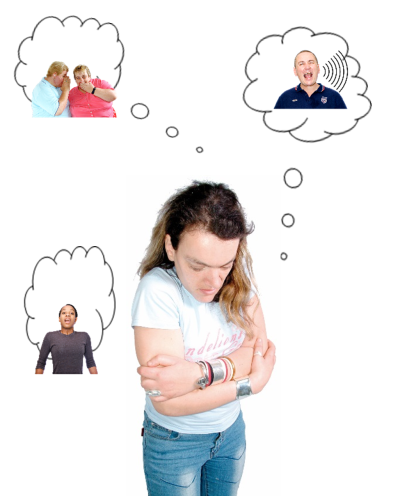
- They might be coming out of the air.
- They might be in your head.
- They might be inside your body.
- It might be your own voice, or someone else’s.
- There might be more than one voice.
- They might say nasty things about you.
- They might say bad things about the people you are with.
- They might be friendly.
- They might not be there all of the time.

You can write a list or draw a picture to show what the voices are like that you hear.
What might it feel like to hear voices?

Sometimes the voices can be helpful.
- They can keep you company.
- They might cheer you up and make you laugh.
- They might help you cope with bad things in your life.

Sometimes they are not helpful.
- They can say the same things over and over again.
- They can make you nervous and jumpy.
- They can upset you.
- They can say bad things about the people you are with.
What about having bad thoughts, or thoughts that upset you?

Sometimes doctors might call this ‘having delusions’.
Some people find that these thoughts upset their lives but other people find that the thoughts help them.

Having these thoughts will feel different for everyone.
You might feel:
- That adverts and TV programmes talk about you.
- You might feel like everyone else is against you.
- It might be that the voices make you feel you are able to do things that would normally be impossible.

You can write a list or draw a picture to show how you feel.
Getting help

Your doctor or nurse will be able to help you.
Some people find that taking a friend or carer along with them to see the doctor helps. Some people would rather see the doctor on their own.
If you feel it's ok, it is helpful if the doctor can ask your friend/carer questions. You may not agree with them, but they will see how the thoughts or voices effect you every day and this is useful information for the doctor.

Your doctor will ask you some questions, like:
- What has been happening over the last few weeks?
- What is your health like?
- If you have been through something very upsetting.
- Your family history, and if any close blood relatives have had similar problems.
- Any medicines you take, and if you use drugs or alcohol now or in the past. They ask this because many things people take to feel better can affect the brain.

Your doctor might ask you to see other health professionals, like:
- Mental Health Nurse
- Psychologist
- Psychiatrist

It is normal to feel nervous or worried when you are going to see a health professional.
You might worry about what will happen.
It can help to get ready before your appointment.
- You can write a list of things you want to ask
- Draw a picture to show how you feel
- Ask a friend, carer or family member to help you think about your questions.
Many people worry that if they tell someone what is happening, they will be put in hospital.
But this almost never happens. It only happens when someone is in real danger.
Hearing voices or having upsetting thoughts is not unusual.
Most people can manage these with support from trained experts.
What else can you do to help yourself?
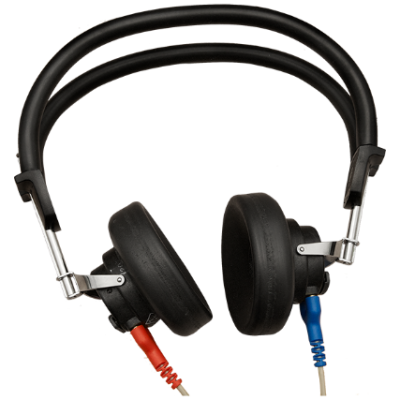
Some people find these things can help:
- Listen to music through earphones.

- Talk into a mobile phone if you need to answer the voices you hear.
- Send the voices away to do a job.
- Ignore the voices.
- Try to relax.

- Go walking or do some exercises.
- Take up a new hobby.
- Look after yourself.
- Eat well and get some sleep.
- Ask your carers or friends to help you talk about how you are feeling.
- Talk to other people who have gone through the same thing.

It's important to keep doing the things you need to look after yourself, your family and where you live. Keeping busy can help take your mind off the voices/thoughts.
It is important not to use alcohol or drugs to help. These can make the voices or thoughts worse.
Only take medicine that your doctor has given you. If you feel the medicine is not helping, go back to your doctor. They can find something safer and better for you.
Where else can you get help?

These organisations can give you help and advice:
Hearing Voices Network
Self help groups to help you think about what is happening.
Email: info
www.

Mind Infoline
Help, information and support.
Telephone: 0300 123 3393
Email: info
www.

Rethink
Advice and information for people with mental health problems.
Advice Service: 0808 801 0525
Email: advice
www.
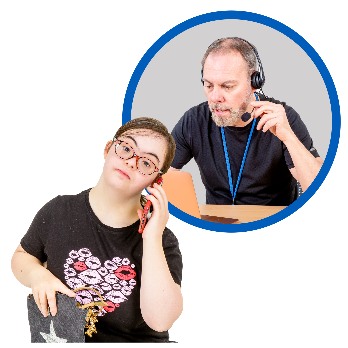
Samaritans
Support for people in a crisis.
Telephone: 116 123
Email: jo
www.
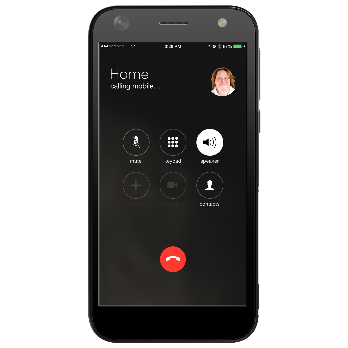
SANEline
Information for people in a crisis.
Telephone: 0300 304 7000
www.sane.org.uk

You can also get help and information from your doctor or nurse.
Acknowledgement

Easy Read version developed by:
- Skills for People, Telephone: 0191 281 8737
Skills for People is a registered charity no. 1069993 - Many thanks to service users and healthcare staff who have contributed to the development of this guide
Adapted from Hearing Voices - A Self Help Guide written by Dr Lesley Maunder and Lorna Cameron www.selfhelp.cntw.nhs.uk
Published by the Patient Information Centre
2025 Copyright, Cumbria, Northumberland, Tyne and Wear NHS Foundation Trust
Ref, PIC/726/0525 May 2025 V4
Review date 2028